Security
What is zero-knowledge encryption, and why does it matter for your backups?
In this article (10 sections)
- Zero-knowledge encryption in plain English
- How zero-knowledge encryption works in a cloud backup
- Zero-knowledge vs "encrypted at rest" and "in transit"
- What zero-knowledge encryption protects you from
- What it doesn't protect you from
- The trade-off: nobody can reset your encryption password
- How to check whether a backup service is really zero-knowledge
- Does encryption slow down backups?
- How EverSafe uses zero-knowledge encryption
- Frequently asked questions
Zero-knowledge encryption means your data is encrypted on your own device, with a key only you hold, before it's sent anywhere. The company storing it has "zero knowledge" of what's inside: it keeps the encrypted data safe, but it can't read it, and neither can anyone who breaks into its systems.
For backups, which by definition hold copies of everything important you own, that matters a great deal. This guide explains how zero-knowledge encryption works in plain English, how it differs from the encryption most online services use, what it protects you from, what it doesn't, and the one trade-off you need to plan for.
Zero-knowledge encryption in plain English
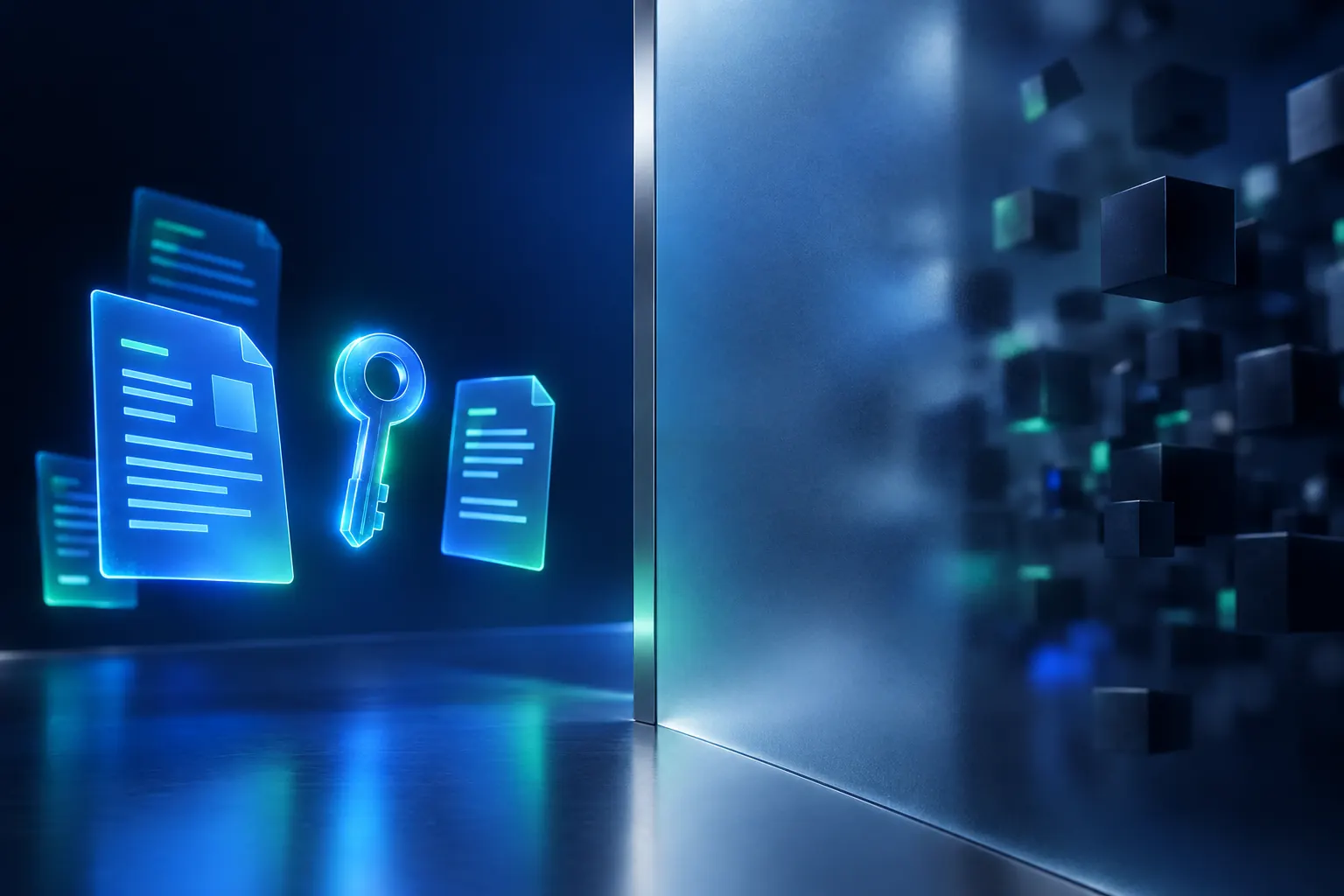
Think of an ordinary cloud service as a storage unit where the company keeps a spare key. Your things are locked away, but staff can open the door if they need to, or if someone makes them. With zero-knowledge encryption, you fit your own lock before the box leaves your house. The company can store it, move it and hand it back, but it never has a key.
In technical terms, three things make a service zero-knowledge:
- Encryption happens on your device, before upload (client-side encryption).
- The key is made from something only you know, usually a password, or generated on your device, and it's never sent to the provider.
- Decryption also happens only on your devices, when you restore.
You'll also see the terms end-to-end encryption, client-side encryption and private key encryption. They overlap, and the test is always the same: can the provider read your data? If it can't, it's zero-knowledge.
How zero-knowledge encryption works in a cloud backup
- You choose an encryption password. This is separate from the password you use to sign in to your account.
- Your device turns it into a key. A key derivation function such as Argon2id or PBKDF2 combines the password with a random value called a salt, and deliberately makes the calculation slow and memory-hungry. That makes it very expensive for anyone to guess passwords by brute force.
- Files are encrypted before upload. A strong cipher such as AES-256, in an authenticated mode like GCM, scrambles each piece of data. "Authenticated" means any tampering is detected when the data is decrypted.
- Only encrypted data leaves your PC. The provider stores unreadable blocks. A well-designed service also hides file names and folder structures, so even the list of what you've backed up stays private.
- Restoring reverses the process on your device. The encrypted data is downloaded and decrypted locally with your key.
Zero-knowledge vs "encrypted at rest" and "in transit"
Almost every online service says your data is encrypted. The question that matters is who holds the key.
| Type | What it means | Who can read your data? |
|---|---|---|
| Encryption in transit (TLS, HTTPS) | Data is encrypted while it travels between your device and the provider | The provider, once it arrives |
| Encryption at rest, provider-managed keys | Data is encrypted on the provider's disks with keys the provider controls | The provider, and anyone who gets access to its keys or systems |
| Zero-knowledge (client-side) encryption | Data is encrypted on your device with a key only you hold | Only you |
Encryption in transit and at rest are good and necessary, but they protect against different things, such as someone intercepting your connection or a disk going missing from a data centre. They don't stop the provider, or someone who has compromised the provider, from reading your files.
What zero-knowledge encryption protects you from
- A breach at the provider. Attackers who get into the storage find only encrypted data.
- Insider access. Staff can't browse your files, because nobody at the company has the key.
- Requests for your data. If the provider is asked to hand over your data, all it can hand over is encrypted blocks it can't decrypt.
- Mistakes. A misconfigured server or a mix-up between accounts exposes encrypted data, not readable files.
For businesses, it can also make data protection simpler to reason about, because personal data in your backups is protected by encryption your supplier can't undo. UK GDPR names encryption as one example of an appropriate security measure, and the ICO has guidance on using it, although it doesn't remove your other obligations.
What it doesn't protect you from
- Malware on your own PC. Ransomware or spyware on your computer can reach files before they're encrypted for backup. Zero-knowledge encryption protects the copy in the cloud, not the PC itself, which is why versioning and immutable storage matter too. Our ransomware protection checklist covers the rest.
- A weak encryption password. A slow key derivation function helps, but a short or reused password is still the weak link. Use a long passphrase you don't use anywhere else.
- Account details. The provider still knows who you are, your email address and billing details, roughly how much you store, and when your backups run.
- Losing your password. This is the big one.
The trade-off: nobody can reset your encryption password
If the provider can't read your data, it can't help you get it back when you forget the password. There's no "forgot password" link for the encryption key, because the provider never had it. With zero-knowledge encryption, a lost encryption password means the backup can't be decrypted by anyone.
That's the whole point of the design, but it means you need a plan:
- Store the encryption password in a password manager.
- Keep a written copy somewhere secure away from the PC, such as a safe or with your important documents.
- In a business, make sure at least two trusted people can get to it, for example through a shared business password vault.
- Don't reuse it anywhere else, and don't keep it only on the computer you're backing up.
How to check whether a backup service is really zero-knowledge
Marketing pages use the phrase loosely, so ask these questions:
- Is data encrypted on my device before upload? It should be, every time, by default.
- Is the key derived from a password only I know, or generated on my device? And where is it stored?
- If I forget my encryption password, can support recover my backups? If the answer is yes, the provider has a way to decrypt your data, so it isn't zero-knowledge.
- Can I browse my files on the provider's website without entering my encryption password? If so, the provider's systems can read them.
- Are file names and folder structures protected as well as file contents?
- Which algorithms are used? Look for established, openly documented choices such as AES-256 and a modern password-based key derivation function, rather than home-made cryptography.
Our guide to choosing a cloud backup service covers the other things to check, and cloud backup vs cloud sync explains why a sync folder isn't the same as a backup, encrypted or not.
Does encryption slow down backups?
Hardly. Modern processors have built-in instructions for AES, so encrypting data adds very little work compared with reading files from disk and uploading them. The slow part of any cloud backup is almost always the internet connection, which is why good services compress data and upload only the parts of files that have changed.
How EverSafe uses zero-knowledge encryption
EverSafe encrypts your files on your Windows PC with AES-256-GCM before they're uploaded. The key is derived from your own encryption password using Argon2id, and it never leaves your device, so EverSafe can't read your backups. After the first backup, only the changed parts of files are compressed, encrypted and uploaded, and backups are stored in an EU data centre.
The flip side applies to EverSafe as well: if you lose your encryption password, your backed-up data can't be recovered by us or by anyone else. That's why the app asks you to keep it safe from day one. You can read more on the features page.
Frequently asked questions
Is zero-knowledge encryption the same as end-to-end encryption?
They're closely related. End-to-end encryption means data is encrypted on the sender's device and only decrypted on the recipient's. With a backup you're both sender and recipient, so an end-to-end encrypted backup is zero-knowledge as long as the provider never has the key.
Can a zero-knowledge provider recover my encryption password?
No. If it could, it wouldn't be zero-knowledge. Keep your encryption password in a password manager, plus a written copy somewhere secure away from your PC.
Is AES-256 secure?
AES-256 is a widely used, openly studied standard and is considered secure. In practice, attacks on encrypted backups go after weak passwords or the devices that hold the keys, not the cipher itself.
Does zero-knowledge encryption help with UK GDPR?
It can help, because it's a strong technical safeguard and a supplier that can't read your data is less of a risk. It doesn't replace your other responsibilities, such as having a contract with your supplier and knowing where data is stored. The ICO publishes guidance on encryption and security. This is general information, not legal advice.
If my backup is encrypted, why do I still need ransomware protection?
Encryption stops other people reading your backup. It doesn't stop ransomware on your PC encrypting your original files, which may then be backed up. Version history and immutable storage let you restore the clean copies from before the attack.
Written by the EverSafe Team. First published ; last updated . This guide is general information, not legal or professional advice.
Related guides
Buying guide
How to choose a cloud backup service: a 12-point checklist for homes and small businesses
What to look for in a cloud backup service: encryption, versions, ransomware protection, restores, data location, UK GDPR and price. A 12-point checklist.
Backup basics
Cloud backup vs cloud sync: is OneDrive, Dropbox or Google Drive a backup?
Cloud sync and cloud backup sound alike but protect you differently. Why OneDrive, Dropbox and Google Drive aren't a full backup, and when to use each.
Security
Ransomware protection for small businesses: a practical UK checklist
A practical ransomware protection checklist for UK small businesses: prevention, immutable and versioned backups, a recovery plan and who to report to.